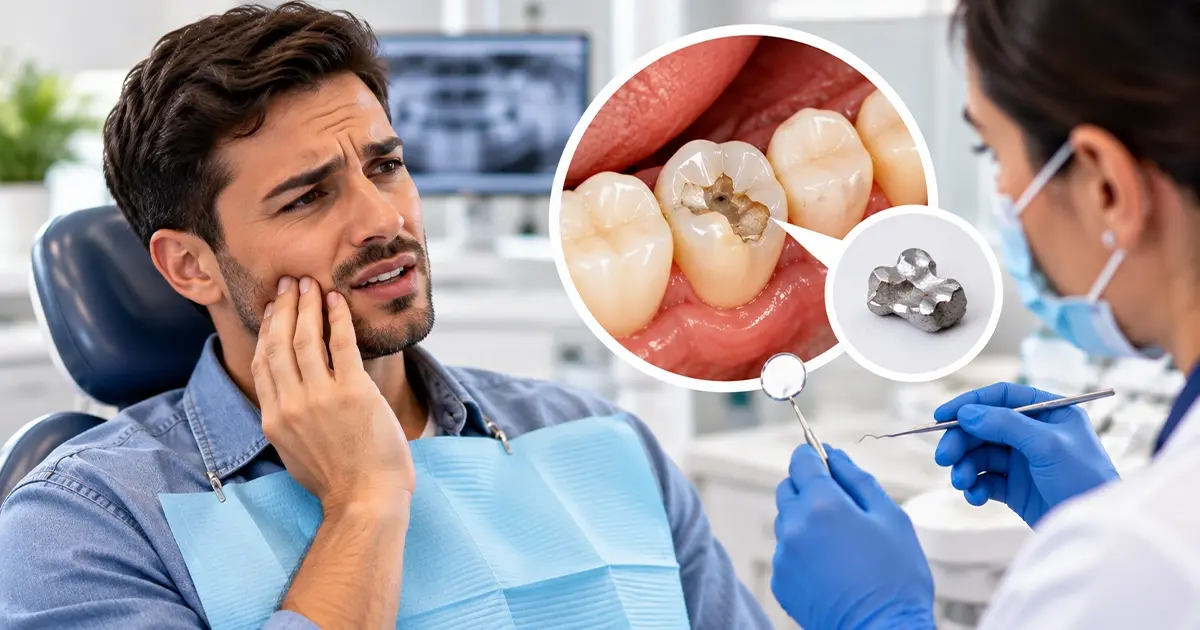
While you’re eating, you see a bump or irregular part of your tooth. The feeling that a tooth filling fell out is unpleasant and can be frustrating if you aren’t certain that it needs to be replaced.
So, see your dentist as soon as possible, letting him know of the accident. There may be no pain in the tooth, but the missing filling should be examined. To hold the tooth until you get to your dentist, do not put any pressure on the tooth and gently clean it.
Why Do Fillings Fall Out?
Fillings aren’t permanent! Over time, they can become soft, crack, or split along their sides. These areas may contain bacteria, which can cause cavities and may impact the area around the tooth. Grinding teeth can also lead to damage to the teeth; hard candy or ice chewings can result in cracks.
The dentist will be able to see the tooth and determine the cause of the failure of the restoration. If it is a relatively new filling and the filling does not fit anymore, call the filling practice, and don’t think that this is wear.
What Causes the Tooth to be Sensitive?
If the filling is lost, the dentin that is under the enamel could be exposed. The dentin has very small canals that may carry sensations towards the nerves in the tooth, causing hot or cold to be uncomfortable. If the nerve is sensitive, this does not mean either that it is exposed or that a root canal is needed. Symptoms may be minimal, severe, or none at all, and would necessitate a dental visit for a diagnosis as to the level of damage and condition of the tooth.
What to Do If a Filling Falls Out
-
Call Your Dentist
If a filling is lost, inform the dental team of pain, swelling, sensitivity, or a broken tooth. This will help them know when to book an appointment with you. If the dentist is not there, then visit another dentist’s practice and request that the dentist see you. If it hurts, do not wait any longer than now before you get advice.
-
Rinse gently
Clean gently using warm water. Discard loose material. Do NOT make a hole with a toothpick, needle, or other sharp pointed object. It may cause breakdown of the tissue and tooth around it. Brush with fluoride toothpaste at least 2x a day. Gently rub if pain occurs around the affected area.
-
Save the Tooth When Eating
And the other side of the food. Avoid using hard foods to chew on the affected tooth. Foods that are very hot, very cold, or very sweet can induce food sensitivity. In this waiting time, avoid high-sugar foods and beverages. Good and preferably utilized in the stomach.
-
Handle Discomfort Wisely
Over-the-counter pain medications (e.g., acetaminophen or ibuprofen) may be of some help, if it is safe for you. Check with your pharmacist if you are taking other medication or if you are unsure; read the label or consult a medical professional.
Aspirin should be avoided in direct contact with the tooth/gums as it will burn tissues. Don’t ignore the pain; it should be treated as a dental condition.
Tooth Filling Fell Out? Temporary Fix Options
A temporary filling kit will also be available in the pharmacy that might be useful for a temporary filling if you need to wait for the dentist to come around to your tooth. Talk to a dentist or chemist to find out if it’s appropriate and then follow the directions.
Every material is different in direction; don’t make guesses about how much to take or when it can be taken. Make use of a temporary filling. Do not use super glue or glue used in the home to re-bond filling materials.
A temporary filling won’t cure the decay or cure the infection, and it is not a guarantee that the tooth is not in trouble.
If the cover causes sensitivity, don’t miss your appointment. Don’t repeatedly patch the opening; if pain or swelling occurs, consult the dentist immediately.
Is a filling loss a Dental emergency?
If a filling comes out, it will require dental care; however, the urgency of the need for dental care will vary depending on the symptoms. If swelling does not occur, an emergency treatment in the hospital may not be necessary. If the pain is severe or there are any signs of an infection, then a quicker evaluation is necessary.
If you have any of the following symptoms, see your dentist right away:
- Increasing or intense pain in the tooth.
- Persistent pain (that is, pain which persists despite appropriate pain relief).
- Swollen gums, cheeks or jaws.
- Pus, off taste, pain or swelling and fever.
Get immediate medical help if breathing, eating, or speaking is affected; if the swelling has spread around the eye/around the neck and/or if it is difficult to open the mouth. Its symptoms shouldn’t be postponed for a regular dental check-up.
How Will Your Dentist Repair a Lost Filling?
Your dentist will check the rest of your teeth for any decay or damage. The type of treatment will be determined by the results, which may be a replacement filling, a crown, or another type of restoration.
In some cases, when there’s enough healthy tooth tissue, an alternative filling could be a possibility. For more extensive damage, a larger inlay can be fabricated and/or a crown might be needed.
Root canal treatment may be required prior to the restoration of the tooth if there is infection or significant damage to the pulp inside the tooth. If it is not possible to save the tooth, extraction is usually considered. If you have lost a filling, you don’t have to have either of these procedures.
Is it possible to decrease the likelihood of losing another tooth filling?
Repair a whole tooth history to heal safety. Wash your oral cavity twice a day with fluoride toothpaste. Floss your teeth daily. Make periodic trips to your dental professional based on what your dental professional suggests.
Limit sweet treats; use utensils for chewing sweets and ice. Your dentist will be able to tell if you need to get a night guard if your teeth are clenched or ground.
When you experience sensitivity, sharp edges, or your bite feels different, call your dentist. The exam can pick up issues you may not be able to at home. All of these are good for the health of your teeth, but no filling will last a lifetime.
Take the Next Step
So, what to do when you lose a filling: you should know what to do. Here are tips: Contact the Daily Smiles Dental Team, keep the area clean, and cover the tooth until your dentist can see you. These “temporary” solutions may help ease the discomfort, but the next step would be to consult a professional who will be able to figure out a permanent solution to the problem.