If your teeth are immediately sensitive to cold, when you drink cold food or drink, or eat anything that has a sweetness to it, then you may have this condition. Or do you have a feeling of jolting in your teeth when you breathe in cold air?
If you answered “yes” to the question, it may be related to your teeth being sensitive. Tooth sensitivity is one of the common dental issues that can result in pain while eating, drinking, or even while brushing and flossing teeth. This form of sensitivity may occur because of things such as tooth decay, gum recession, or wearing of tooth enamel. Fortunately, there are treatments to help.
At Daily Smiles, the key to solving the problem of sensitive teeth is to understand the possible cause of the problem.
What is tooth sensitivity?
Tooth sensitivity, otherwise referred to as dentin hypersensitivity, refers to when the inner part of the tooth becomes exposed.
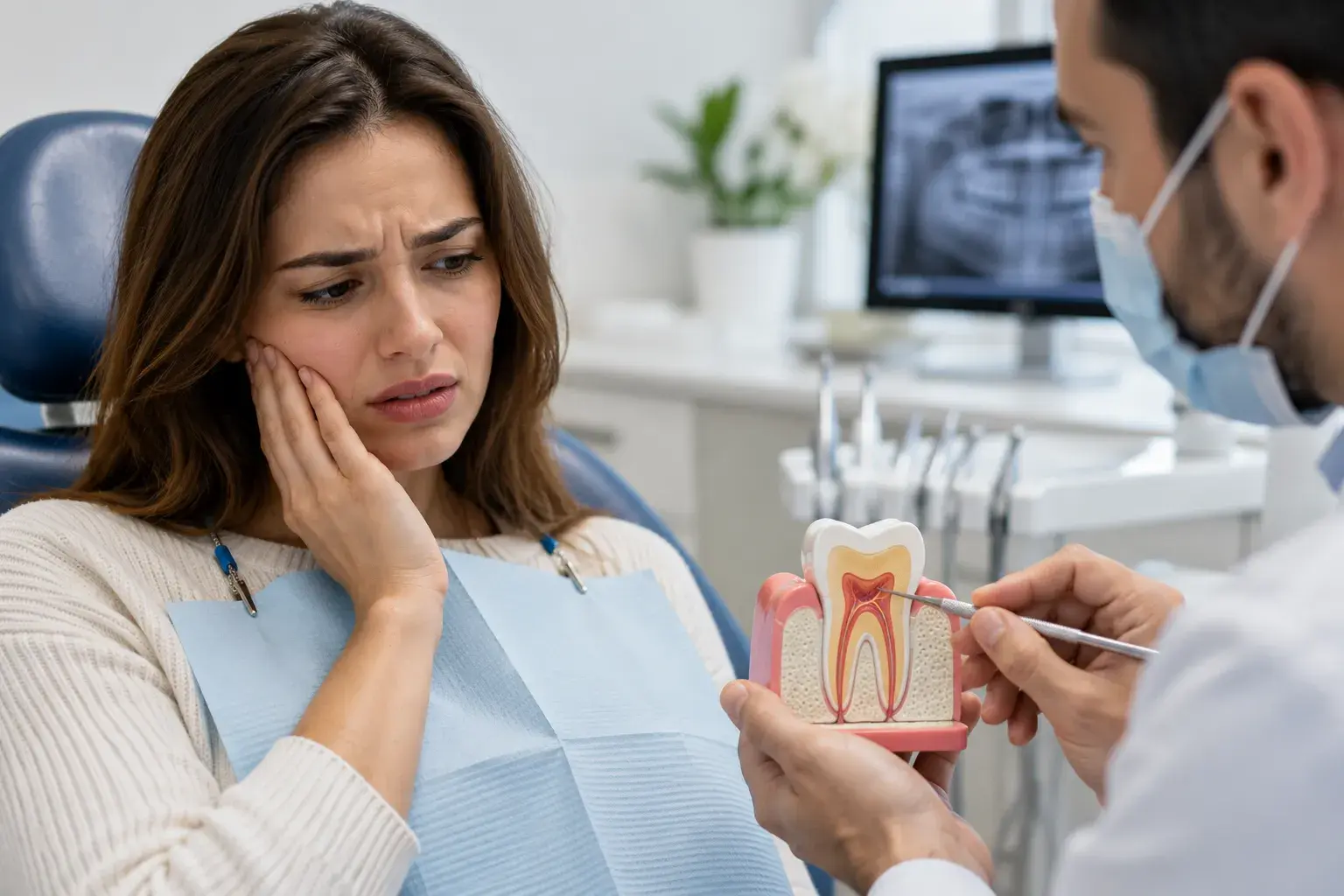
Normally, the tooth is protected by an outer layer called enamel. Teeth are covered by enamel, and then dentin, which contains small tubes that are connected to the nerves within the teeth. When the enamel layer erodes or wears away, then the dentin is left exposed.
Hot, cold, sweet, sour, or cold air stimulates the nerves, which in turn results in pain or discomfort in the tooth.
This condition may be experienced in only one tooth or more than one tooth. Some people will experience temporary sensitivity; others will experience permanent sensitivity.
What is the cause of tooth sensitivity?
Several reasons may exist that could be the reason for your teeth becoming sensitive.
-
Damaged Tooth Enamel
It is one of the strongest structures in your body, but it can break down with age.
Damage to the enamel can be caused by excessive brushing, food or beverages that are too acidic, grinding teeth, and some bad habits. Consequently, the dentin that lies beneath is stimulated easily.
You might find that temperature, cold, and sweetness affect you more than before.
-
Excessive Brushing
Brushing is important for maintaining a healthy mouth, but don’t brush too hard.
As truth brushing and hard bristled toothbrushes can wear down the enamel and damage the gums. Over time, the gums can begin to recede and reveal sensitive spots around the teeth’ roots.
It is better to use a soft toothbrush when brushing your teeth.
-
Gum Recession
When the gums are pulled back, many areas of the tooth root are exposed. Contrary to the top of the tooth, which is covered by tough enamel, the root is not.
Gum recession can occur due to gum disease, brushing too hard, age, or other oral issues.
-
Tooth Decay
Sensitivities can also result from a cavity.
When decay goes through the enamel and reaches the dentin, the dentin and the nerves can be affected, causing the dentin to become sensitive. It’s possible you experience pain while chewing on sweets, drinking cold drinks, or chewing.
If your cavity does not resolve, then it will continue to get worse and should not be ignored.
-
Broken/Chipped Teeth
A cracked or broken tooth may expose internal tooth structures which may be extremely sensitive.
Temperature and pressure can enter the nerves in the tooth through a small opening. It causes symptoms such as sensitivity while chewing, biting pain, or sensitivity to hot/cold food.
The cracking of the tooth can be a serious issue that needs the attention of a dentist if any such crack is present.
-
Teeth Grinding
Tooth grinding or bruxism for a long period of time leads to enamel loss.
The issue that most people have, and it’s not apparent to them, is the tendency to grind and/or clench their teeth while asleep; this is known as bruxism. As pressure is applied, over time, the tooth surface is flattened and tiny fissures form, followed by the exposure of the denting.
Other symptoms of teeth grinding could be a painful jaw, headache, or tooth wear.
-
Acidic foods and drinks.
Regular intake of foods and drinks that contain high acidity levels can lead to enamel erosion.
Sports drinks, citrus fruit, vinegar-containing foods, juices, soft drinks, and energy drinks are examples of such foods and drinks.
The tooth enamel weakens temporarily during this time, causing the enamel to wear away. Avoid consuming large quantities of foods with a high PH value and avoid water immediately after meals.
-
Teeth Whitening
Some patients may experience temporary sensitivity from professional teeth whitening or whitening done at home.
Whitening agents might briefly get into the tooth enamel and cause damage to the more sensitive parts of the tooth.
Usually, the sensitivity disappears after the treatment; however, if it increases or lasts a prolonged time, you should contact your dentist.
-
Recent Dental Treatment
After some dental treatments, the sensitivity can occur temporarily.
Sometimes these teeth and gums can be irritated by crown placement, dental fillings, professional cleanings, root planing, and other dental work.
The sensitivity typically will diminish in 2 days or weeks, unless there is some underlying condition that is exacerbating it. If the pain continues, you should ask for advice from your dentist.
What is the treatment for sensitive teeth?
Treatment is dependent upon the cause of sensitivity.
Treat Gum Problems
The treatment will be different depending on the extent of the disease, ranging from professional cleanings to periodontal surgery.
If the sensitivity is due to receding gums or periodontal disease, then treating the gum disease should help to make it more comfortable.
If the sensitivity is due to gum recession or gum disease, treating the gum disease might help to relieve symptoms.
Use Toothpaste for Sensitive Teeth
One of the most widely used types of toothpaste to address mild sensitivity is desensitizing toothpaste.
These toothpastes have ingredients that are intended to suppress the transmission of feeling from the tooth surface to the nerve.
It can be necessary to use the toothpaste regularly for a number of weeks before you see the complete effect.
Use the proper toothbrush
Use a soft toothbrush and gently and slowly brush with circular motion.
Using fluoride toothpaste will help you remove plaque when you brush your teeth twice a day and will help to protect your teeth’s enamel.
Don’t brush directly after eating or drinking foods or drinks that are high in acid since the enamel may be softer.
Fix Cavities/Damaged Teeth
If dental sensitivity is caused by dental decay, cracks, or other dental damage, then professional treatment may be needed.
Treatment will depend on the problem, such as filling, crown, bonding, etc.
Consider Fluoride Treatment
Fluoride treatments might be recommended by a dentist to harden the enamel of teeth and decrease sensitivity.
The areas of the tooth that have been exposed can be strengthened by a professional fluoride gel or varnish, and the teeth are less likely to be damaged by the acids.
Use a Night Guard for Teeth Grinding
A custom night guard can be recommended by your dentist if you grind your teeth while sleeping.
A night guard creates a barrier between the upper and lower teeth, helping to reduce enamel wear and pressure created by grinding.
How to Avoid Sensitive Teeth?
At the very least, every day care of your teeth will reduce the risk of suffering from tooth sensitivity.
Brush your teeth at least twice a day with a soft-bristled brush, floss regularly, limit the number of acidic foods and beverages you eat and drink, and brush your teeth gently.
Regular check-ups are also crucial, as cavities, gum disease, cracks, and enamel erosion can be more easily treated if they are discovered early.
When Should I go to the Dentist?
The sensitivity could just be a problem in some instances. But if it persists and worsens, then it’s time to go to the dentist. These symptoms may be indications of tooth decay, gum disease, infection, or any other oral health condition that requires treatment.
If the pain lasts longer, does not appear to be caused by something, affects the person’s eating, and if there is swelling, severe pain, or if the gums are bleeding, go to the dentist.
Final Thoughts
There are many issues that they’ll have, including sensitive teeth. Sensitive teeth require attention to the way you brush, a sensitive toothpaste, protection of your teeth enamel, and a visit to the dentist to correct your dental problems.
But if you have been able to find out what is causing it, it will take little time for you to figure out the solution. The most common causes of sensitive teeth are receding gums, cavities, over-brushing, teeth grinding, teeth whitening, cracked teeth, and eroded enamel.
If you still have the problem and the condition worsens, you may visit a dentist, and he/she will be able to diagnose and give you the proper treatment. The key to healthy teeth and gums at Daily Smiles is to be aware of the early signs.