
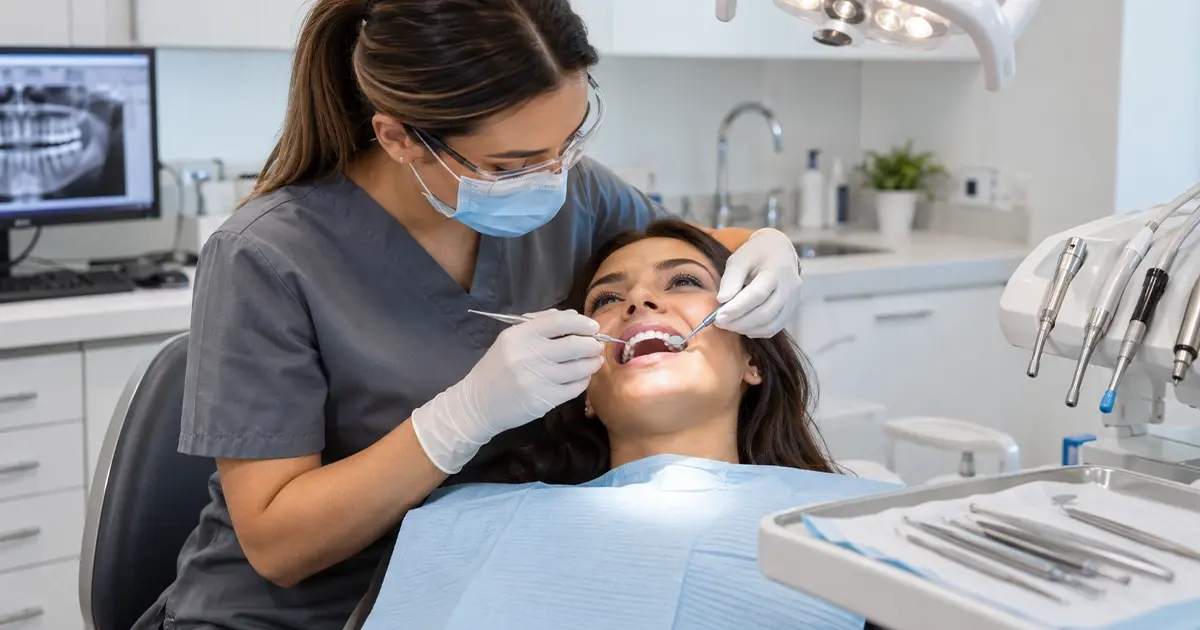
Do you think it’s all about sitting in the dental chair while someone pokes around a bit, then lets you leave? Right? If you haven’t had a routine teeth cleaning or it’s been a while since your last one, you might want to know what actually happens during the process. Many people fear teeth cleaning as some hurtful or frightening process, but it’s not so. Although the process involves prodding and unusual noise, teeth cleaning is painless and simple. Understanding what exactly happens during regular dental check-ups and cleanings not only releases your stress but also allows you to experience minty-fresh results. Let’s explore a simple breakdown of what a dental cleaning process looks like.
Types of Dental Cleanings
Various teeth cleaning types are available depending on your dental needs.
-
Routine Cleaning
If you have healthy teeth and gums, you are in the safe zone. This is a commonly performed dental cleaning that you typically receive during your routine dental appointments.
-
Full Oral Debridement
Gross debridement is a cleaning type that helps to remove tartar and heavy plaque buildup between the teeth that otherwise stops your dentist from performing a comprehensive oral examination.
-
Deep Cleaning
Scaling and root planing address gum diseases. Scaling effectively targets tartar and plaque above and below the gumline. Root planing works on the root surface to stop further buildup. This is how reattachment of gum tissues to root surfaces is achieved.
-
Periodontal Maintenance
The cleaning process is almost complete after scaling and root planing. If you have periodontitis, deep cleaning is effective in protecting the gumline against tartar, plaque and bacteria. Let’s maintain oral health.
Key Steps of Regular Dental Cleaning Process
According to a dental report, almost 20% of U.S. adults above 20 age have managed at least one dental cavity and nearly 42% of U.S. adults are suffering from gum related problems. Holistically, oral diseases affect nearly 3.5 billion people worldwide. These statistics signify the role of routine dental cleanings in healthy oral life.
-
Initial Oral Examination
Using a small dental mirror, a dentist examines your teeth and gums condition to identify any signs of gingivitis or other serious dental concerns. If the expert finds signs of cavities or gum disease, further action is proposed based on the oral requirements.
-
Plaque and Tartar Removal
Using a small guiding mirror, a dental expert scrapes your teeth, removing all cavities and tartar around the gumline and between the teeth. The scraping sound may feel annoying, but it’s normal. The depth of tartar defines how long it takes to scrape the particular spot. If you want to say goodbye to plaque and tartar buildup, add brushing and flossing to your oral hygiene routine.
-
Dental Polishing
Once your teeth are tartar and plaque-free, your dental professional will brush your teeth using a high-powered electric brush. It produces some grinding noise but is an effective way to remove even a bit of tartar left stuck along the gumline or even above or below the teeth. Professional dentists apply a gritty toothpaste for better consistency. This works as a gentle scrub for your teeth to make them ready for polishing. Post-teeth polishing requires extra care at home to avoid enamel erosion.
-
Expert Teeth Flossing
Whether you regularly perform flossing at home or not, nothing can match an expert flossing session at a dental clinic. Your dental doctor is experienced enough to locate the trouble zones between your teeth more susceptible to gum bleeding. This is where professional flossing comes into play to remove even any leftover plaque during the cleaning process.
-
Rinsing and Fluoride Treatment
The next step of the process is to properly rinse the mouth to get rid of all the debris. Your dental expert can provide you with a proper rinse containing liquid fluoride. The last step of the routine dental cleaning process is fluoride treatment, a tooth protector to combat cavities for several months. Some dentists even place flavoured foamy gel into a mouthpiece, and fluoride varnish is also painted onto the teeth to help you eat and drink right after the process.
The frequency of dental cleaning and hygiene depends on the oral requirements and potential problems. Professional teeth cleaning and dental X-rays should be performed twice a year depending on your dentist’s recommendation.
Why Routine Dental Cleaning Matters
There are several reasons that convince you to visit a dental office for an in-depth dental examination and cleaning before any mishap occurs.
- Home based brushing and flossing can perform basic-level cleaning, but can’t remove plaque and tartar completely.
- Typically, patients don’t have any specialised cleaning tools at home except a basic toothbrush and dental floss.
- More delays in complete tartar removal along the gumline can irritate and allow more plaque buildup.
- Without professional cleaning, gum inflammation, cavities and bad breath can severely affect your oral health.
Benefits of Regular Dental Cleaning
Routine teeth cleaning produces various health focused quality results.
- Saves money by avoiding serious dental problems.
- Control bacterial infections that typically cause bad breath.
- Reduces the risk of heart disease and dementia.
- Reduces the risk of gum diseases and other oral problems.
What to Expect After Routine Dental Cleaning?
Most people don’t wait and return to routine eating habits right away. This can be hurtful for your slightly sensitive teeth and gums that recently got a deep cleaning session. Consider when to eat and drink, especially if you received fluoride varnish. Good oral hygiene helps you achieve your dental goals. If you still feel any swelling, pain or bleeding, contact professional Daily Smiles expert dentists to protect your teeth and gums for their long life.