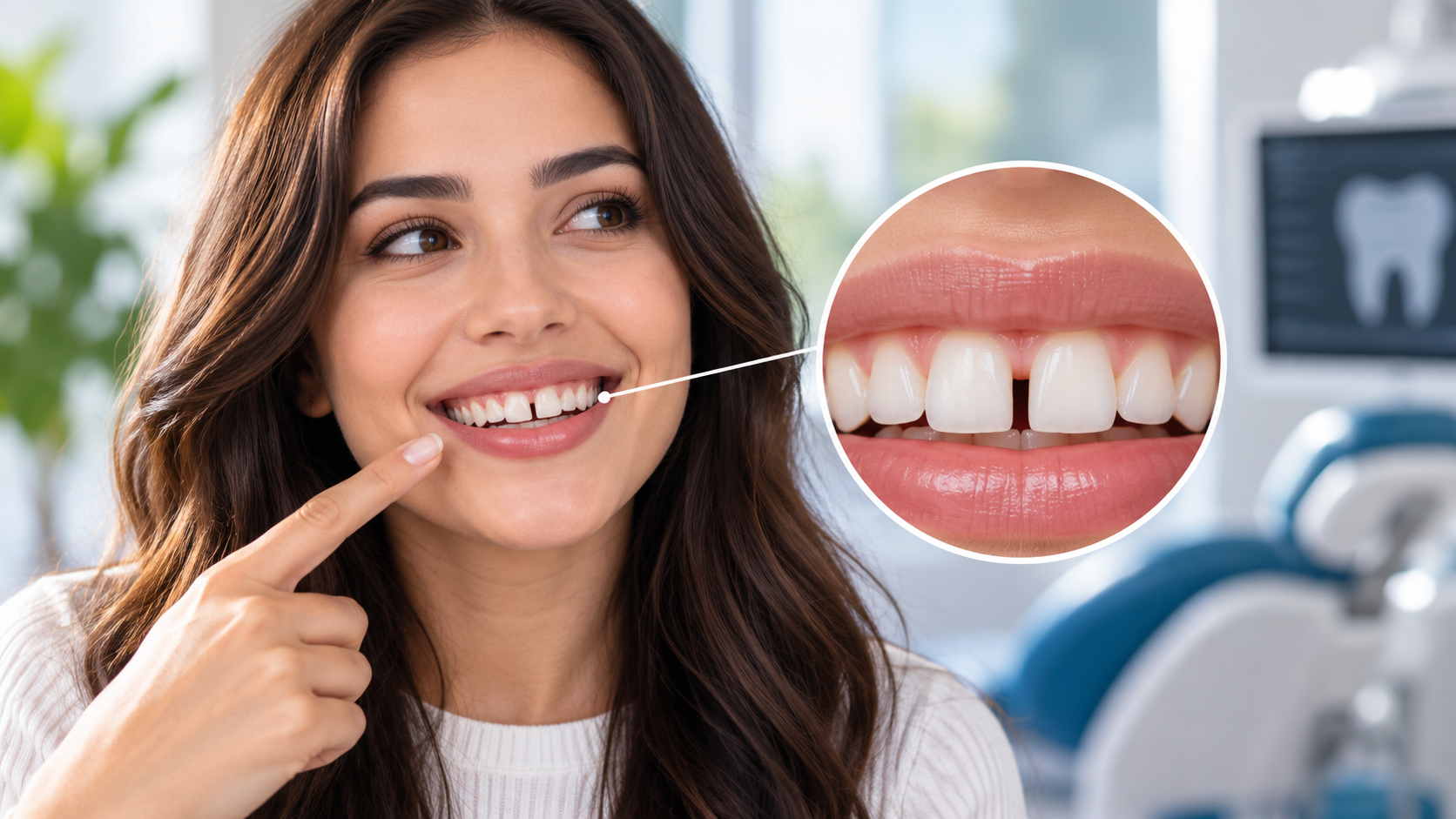
This gap in the front teeth can be a standout element of your smile, or something you’d like to alter. When you have to make a decision about what to do, it’s best to ask a more important question: why is the space there?
This blog, offered by Daily Smiles, explains the common causes, signs to watch for, and treatment options to discuss with a dental team. The intention is not to define all gaps as a problem but to assist you in making your decision.
What Is a Front Teeth Gap?
A gap between the teeth is known as a diastema. It is usually seen between the two front top teeth, but gaps can be seen elsewhere. If a gap has healthy, sound teeth and gums, it might not require treatment.
Common Causes of a Gap in Front Teeth
Tooth Size, Jaw Size, and Genetics
Teeth and jaws are of different sizes. If the teeth are smaller in size than the jaw, they may not fill the space, or there may be gaps. Similar smiles within families may be due to inherited dental features. It isn’t actually a rule that teeth with spacing indicate poor oral care.
Normal Childhood Development
Gaps can occur when baby teeth fall out, and permanent teeth grow in. In some spaces, they get narrower as the adult teeth come in. It’s okay if there is a small space in the front teeth during this transition period, but it may not correct itself, so a dentist should watch for growth and should not presume that all gaps that occur when a child is going to close up.
The Tissue Connecting the Upper Lip and Gums
The labial frenum is a piece of tissue that attaches the upper lip to the gums. Giant attachments can be one of the causes of a diastema. The presence of this type of tissue does not, however, decide the treatment. A dentist will need to evaluate if it is causing spacing.
Thumb Sucking and Tongue Pressure
If thumb sucking or pacifier sucking is persistent, it may affect the development of teeth and jaws. The habits can cause the front teeth to protrude or alter the way the teeth come together. Spacing can also be caused by tongue pressure, especially if this pressure is exerted on the front teeth again and again. The bite should not be the only factor taken into account for assessment; the habit also needs to be assessed.
Missing or Undersized Teeth
The absence of a tooth can lead to the migration of adjacent teeth and alter the spacing. Unusually narrow teeth can create gaps, too. If this occurs, then closing the central area alone may not fix the higher alignment. The adjacent teeth must also be taken into account when planning a treatment.
Gum Disease and Loss of Support
As the disease progresses, advanced gum disease can cause deterioration of the tissues and bone that hold the teeth in place. Teeth might become loose or shift apart as support weakens. If you experience bleeding gums, chronic bad breath, and/or changes in your bite, then a new gap in adulthood is something you should address. Gum disease can be without any sign of pain, which is why pain is not a good indicator.
Movement After Orthodontic Treatment
Braces or aligners can cause teeth to shift back into spaces after they were closed, causing them to open back up. They hold their corrected positions with the aid of retainers. Not wearing a removable retainer as directed, or having a fixed retainer become loose, can put results at risk. Call your orthodontist if a retainer breaks or doesn’t fit.
When Should You See a Dentist
See your dentist if the gap has just developed, is increasing, or occurs with swollen gums, bleeding, loose teeth, or a changed bite. These signs matter more than the gap’s appearance. Don’t put off your appointment to see about gum disease until you feel pain.
During the appointment, narrate when the change started and whether it has developed or not. Discuss previous orthodontic treatment and any issues with retainers. All of this information helps your dentist provide you with the necessary context and will enable you to ask effective questions about the next steps.
Ask if the gap is constant, if gums are healthy, and what may occur in the event you select monitoring rather than treatment.
How Can a Front Teeth Gap Be Treated?
The proper method will vary depending on the cause, tooth size, gum condition, and objectives. Spaces and alignment issues will be resolved by moving teeth with braces or clear aligners. Not all are appropriate for all appliances, and retainers are essential following the appliance.
If the gap between the front teeth is an appropriate size, dental bonding can be used to fill in some of the space with tooth colored material to make the teeth more aesthetically pleasing. Bonding alters the shape of a tooth rather than moving the teeth. Bonding can become chipped or discoloured; consider maintenance and suitability prior to selection.
One advantage of veneers is that they can modify the surfaces of the teeth to hide select gaps. But the traditional veneer treatment requires enamel to be removed and cannot be undone. They don’t automatically come to mind as your first option when it comes to a healthy minor gap. Previously, if there is any decay or gum disease, it should be treated before the veneers are applied.
If missing teeth cause spacing, replacement teeth may be a part of the treatment plan, in addition to moving the front teeth together. If the gum disease is the cause, a more important issue is the control of the infection rather than cosmetic work. So the treatment may be more than one treatment, depending on the assessment result.
Discuss with your dentist whether monitoring is indicated and the impact on tooth structure. Talk about the most likely maintenance, restrictions, and treatment plan, instead of looks.
Can You Prevent Teeth Spacing?
Brushing can’t alter the proportions of inherited teeth and jaws. But brushing twice a day and cleaning between teeth daily help maintain gum health. Dental checkups are important for the early detection of gum disease, and abstaining from tobacco is one of the risk factors that can be eliminated. Your dentist will be able to suggest dental cleaning tools that are appropriate for you.
Do not use rubber bands or other makeshift closures to seal gaps. Bands can fit under the gum line, injure supporting tissues, and lead to tooth loss. It is important to have a professional assessment prior to any tooth movement attempts.
Discuss Your Smile With Daily Smiles
If you’re willing to leave the gap the way it is, or you’d like to switch it, begin by asking questions about what caused it and about your oral health. Call Daily Smiles to talk about your concerns and schedule a dental evaluation. Before you decide on a smart solution for your smile, it’s crucial that you understand why you’re missing a tooth or have a gap in the front teeth.