
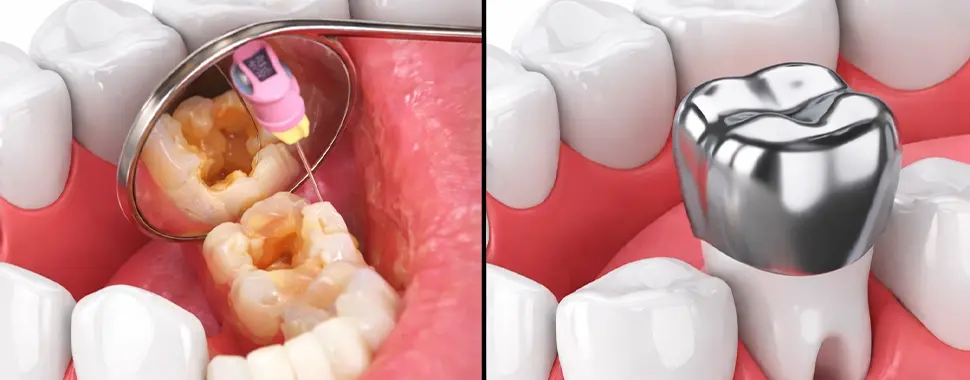
Your smile is the first thing people often notice, and a healthy set of teeth offers a promising layer of protection. Sometimes teeth demand extra care and a little more help to restore their health. If you are one who ever chipped a tooth, got a proper filling, or had a root canal treatment, your dentist might have offered you dental crown treatment. Do you want to know what a crown is actually and when it is mostly used in dental treatments? This article helps you understand this term and how it can help you restore your smile while protecting your oral health. Let this guide make it easy for you to understand and make a decision.
Understanding Dental Crown
A tooth-shaped cap provides a safe cover to the entire visible area of a decayed or weakened tooth. This is meticulously designed to restore the size, shape, strength and overall appearance of your tooth. People often get afraid of it, but it serves as a protective option for your tooth. It smoothly fits snugly over the tooth top and is gently cemented in place, seamlessly blending in with your original teeth.
Explore Types of Dental Crowns
Different quality standards are available in crown depending on the material and your preferences.
- Metallic: Gold or alloy-made dental crowns are safe and long-lasting. They are effective for back teeth.
- Zirconia: These are highly durable and perfect for aesthetic purposes. These crowns are utilized for all areas of the mouth.
- Porcelain-fused-to-metal: These crowns are good in strength and offer a natural tooth colored appearance.
- Porcelain or Ceramic: Experience natural-looking and ideal porcelain crowns for front teeth.
When Do You Need a Dental Crown?
Once your dentist realises that your tooth is too decayed or damaged for filling, the next possible option is a dental crown to provide adequate protection for it. This section helps you understand the situations your dentist may recommend for a tooth crown.
-
Post Root Canal
Sometimes, root canal treatment is not enough. Your dentist may recommend a tooth crown treatment for more strength and protection from breaking.
-
Cracked Tooth Restoration
Is your tooth fractured or have large chips? Don’t fret. A dental crown can easily restore its function and avoid further damage.
-
Repair of Worn Tooth
Sometimes, during dental treatment, teeth are worn down during the grinding process or acid interaction. Crowns can help you restore the shape of your teeth while providing a shield from future problems.
-
Large Filling Coverage
Filling sounds more protective and durable treatment but it actually consumes more than half the width of your tooth. Eventually, the healthy structure becomes weak. A professional dentist recommends dental crown services for an extra layer of support.
-
Tooth Appearance
There are various cosmetic reasons to go for crowns. Individuals who want to provide a proper cover to discoloured, damaged or uneven teeth lean on crowns to improve the overall appearance.
-
Dental Bridge Support
Crowns effectively anchor a bridge in place. This is the perfect treatment for one or more missing teeth.
Dental Crown Procedure
This is a routine process which takes almost two visits to complete. Do you want to know what actually happens when a dental crown is placed? This section helps you understand the process.
Preparation of Tooth
The first step begins with your tooth examination through x-ray if required. Your dentist smoothly removes the enamel to create the required space for the next process. The tooth impressions are important for the correct design of the crown. A temporary crown can provide the cover while the permanent one is being fabricated.
Crown Placement
The second step is about custom crown placement, which is typically made within one or two weeks. The dentist removes the temporary fitting and checks the new crown for fitting and perfect appearance. After satisfaction, the crown is permanently adjusted into the right place.
There are even various cutting-edge techniques and top-graded materials to ensure smooth crown restoration for a comfortable and natural appearance.
Dental Crowns Durability
Care is mandatory for lasting results. With protective measures, dental crowns are safe to last many years. Their life span revolves around the material usage, oral habits, and wear and tear the crown is exposed to.
Do you want to achieve the maximum from your crown? Follow the following:
- Don’t chew on hard objects such as ice.
- Ensure daily brushing and flossing.
- Regular examination and proper cleaning from a professional dentist.
- If you grind your teeth, just wear a nightguard.
Potential Benefits of Dental Crowns
A right crown can make a real difference, not just in the look but in how it feels and performs day to day. Some of the leading benefits of choosing crown treatment are here.
- Ultimate protection of teeth from erosion.
- Strengthens chewing function.
- Supports damaged tooth restoration.
- Improves the overall appearance.
- Last for years with proper care.
Crowns offer ideally modern restorative care. It is a proven way to protect weakened teeth. This guide is helpful for all those patients who are mostly intimidated from crown dental treatment. Proper dental checkups are necessary to support both oral health and mental peace.